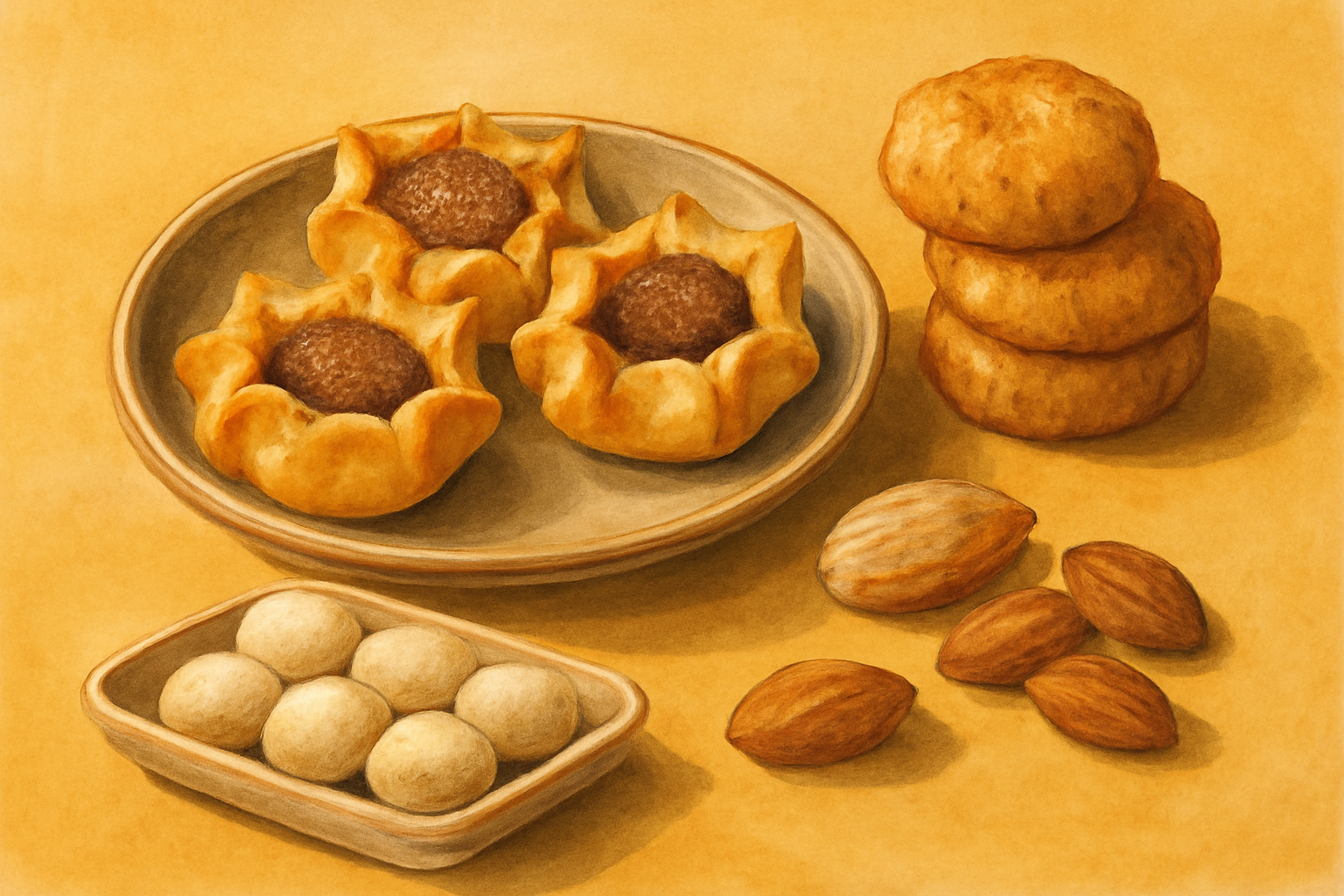
In Cagliari, the food vocabulary often reflects the wider Campidano plain of southern Sardinia. Other names and recipes come from elsewhere on the island: a sweet associated with a celebration or a particular town is not necessarily a Cagliari invention. Use this guide to recognise what is on offer and decide which texture and flavour appeal to you.
Start with the texture you want
| Sweet | What to expect | Choose it for |
|---|---|---|
| Pardulas | Thin pastry with a soft ricotta filling | A small, fragrant cheese-based sweet |
| Pistoccus | Soft biscuits similar to savoiardi | A simple biscuit with lemon or vanilla notes |
| Pirichittus | Egg pastry under crisp lemon glaze | A contrast between glaze and centre |
| Bianchini | Friable outside and tender, creamy centre | A meringue-like sweet with almonds |
| Papassinus | Short-pastry biscuits with raisins and nuts | A richer, fruit-and-nut flavour |
| Tiliccas | Thin crisp pastry around a sweet filling | Honey or sapa and almond flavours |
Sources: SardegnaTurismo: traditional sweets, names and celebrations
Names and recipes can change from one territory to another, so treat the descriptions as a way to start a conversation rather than a promise that every example will be identical. If an ingredient matters to you, ask about the particular preparation. Festival associations describe tradition, not a guarantee that a sweet will be available on a given day.
Pardulas and casadinas: the cheese-filled family
Pardulas are a useful southern Sardinian starting point. In Campidano and Sulcis, they are commonly made with ricotta flavoured with lemon and saffron, held in a little basket of thin pastry. The filling is soft, and the finished sweet may be dusted with icing sugar. Think of the pastry as a delicate frame for the filling rather than the main event.
Compare them with casadinas, associated with Easter in Barbagia and Logudoro. There, fresh cheese and raisins are used in the filling. In Sassarese and Gallura, related names include casgiaddine and casgiatini. The regional tourism account distinguishes the southern ricotta version from the cheese-and-raisin preparation: that distinction is more useful than assuming all the names refer to an identical recipe.
Choose a pardula when you want a small pastry with a soft centre and citrus fragrance. If you encounter another name, ask whether the filling is ricotta or cheese and whether it includes raisins. The answer tells you more about what you are about to eat than the spelling alone.
Seadas: a warm cheese dessert
A seada, also called sebada, is a different proposition from a small baked pardula. Two discs of pastry enclose a tangy, melting cheese filling scented with orange or lemon zest. The pastry is fried, covered with honey and served hot and crisp. SardegnaTurismo connects its origins with the pastoral culture of Barbagia, rather than specifically with Cagliari.
Sources: Seadas: filling, preparation and pastoral association
Choose it when you want a warm dessert with a pronounced contrast: crisp pastry, savoury-tangy cheese and sweet honey. It makes a substantial alternative to selecting several small biscuits. The regional source mentions strawberry-tree honey as a preferred accompaniment, but the useful question when ordering is simply which honey is being used.
Pistoccus and other biscuits: look beyond the similar names
Pistoccus are the Campidano name for biscuits related to the biscuits of Fonni. The regional tourism description compares the Fonni biscuits to savoiardi, or ladyfingers, but describes them as softer and scented with lemon or vanilla. Eggs, sugar and flour form the basic mixture. If you want something relatively simple rather than a filled or glazed sweet, this is a good family to start with.
Is pistoccheddus grussus are another biscuit to recognise: dry, light and crumbly, with roots in towns around Monte Linas, where they are called gallettinas. Their texture makes them a different choice from the softer pistoccus. Similar-looking names also appear on glazed sweets, so ask for a description if you are choosing by texture.
There is also a separate bread called pane pistoccu. SardegnaTurismo describes it as a twice-baked flatbread associated with Ogliastra. Do not assume that a reference to pistoccu always means a sweet biscuit: the surrounding words and the bakery counter provide important context.
Sources: Pane pistoccu of Ogliastra
Pirichittus and bianchini: two very different white sweets
Pirichittus are a Campidano speciality associated with Easter. They have an egg-pastry base and a crisp glaze flavoured with lemon. The centre matters: pirichittus de bentu are hollow, while pirichittus prenus, also called a matza de mindua, have an almond-paste filling. One gives you more of a light shell; the other adds a distinctly almond-rich centre.
Sources: Pirichittus and their hollow or almond-filled centres
For another glazed option, look for pistoccheddus de cappa or incappaus. These have a white glaze and can be shaped in various ways. Those associated with Serrenti are known for animal shapes. Their appearance can make them easy to notice, but the name and preparation still matter more than colour alone.
Bianchini, or bianchetti, belong to a different family. They resemble meringues, with a white, rippled shape, a friable exterior and a tender, creamy interior. They are made by whipping egg whites with sugar, lemon and almonds, and may be decorated with coloured or silver sugar decorations. Other regional names include marigosos, suspiros, giarminos and gesminus.
The practical comparison is straightforward: choose pirichittus for lemon glaze over pastry, and bianchini for the contrast between a delicate exterior and softer centre. Despite the meringue comparison, bianchini should not be assumed to contain only egg whites and sugar; almonds are part of the preparation described by the regional source.
Almonds, raisins and honey: sweets with a sense of place
Amaretti are almond sweets associated with celebrations. SardegnaTurismo describes them as golden and crisp, made with a mixture of sweet and bitter almonds. They are a useful choice if the almond flavour itself is your priority, rather than a filling enclosed in pastry.
Sources: Amaretti and almond ingredients
Papassinus, called pabassinos in the centre and north, take their name from papassa, meaning raisins. These small short-pastry biscuits combine raisins with ingredients including almonds and walnuts. They may be glazed and decorated with silver sugar pieces or brushed with egg yolk before baking. Traditionally autumn sweets, they are also associated with other occasions.
The seasoning changes by territory. In Campidano, cinnamon, vanilla or sapa may flavour papassinus; in Barbagia and Logudoro, citrus zest, wild fennel seeds or anise are used. Sapa is cooked grape must, a concentrated ingredient with a distinctive flavour. If you enjoy comparing regional versions, this is a particularly useful sweet to ask about.
Tiliccas offer another combination of crisp pastry and sweet filling. Associated with the centre and north, they are found under different names, including caschettas in Belvì. A very thin pastry surrounds a filling of almonds and honey or sapa, with orange zest and saffron. Shapes can include horseshoes, hearts, spirals or letters. Choose them for the contrast between the thin shell and the aromatic filling.
Sources: Tiliccas and caschettas
Sweets and celebrations: reading the traditional context
Many Sardinian sweets are tied to family ceremonies and the seasonal calendar. Easter brings the cheese-filled casadinas and pardulas into the story, alongside Campidano pirichittus. Autumn and All Saints are associated with sapa-based sweets, including pan’e sapa, a dark, slowly leavened sweet with cooked grape must and cinnamon, documented in lower Campidano and the Nuoro area.
Sources: Easter sweets and pan’e sapa
Torrone, or nougat, is traditionally associated with Christmas. Tonara is especially connected with its production: the regional account describes honey slowly worked before almonds, hazelnuts or walnuts are added. Elsewhere, copulettas from Ittireddu and Ozieri have a traditional connection with weddings and baptisms; their flower or crescent shapes may carry the initials of the people being celebrated.
These associations add meaning to a choice without restricting it. A pastry can retain its connection to a feast even when it is prepared for another occasion. Conversely, visiting at Easter or Christmas does not establish what an individual shop will have ready.
A Cagliari connection: su papai biancu
For a sweet with a documented historical link to the city, look for the name su papai biancu. SardegnaTurismo describes it as a milk pudding sweetened and flavoured with almond and lemon, already prepared in medieval Cagliari. It offers a different texture from the pastries above: think pudding rather than a biscuit or crisp shell.
That local connection is worth distinguishing from the broader Sardinian traditions you may encounter during a stay. If you are exploring the centre, the Marina cultural walk is a useful companion for understanding the harbour-side district; leave your choice of sweet open to what you actually find.
How to choose a small tasting
For a varied first selection, pair one soft sweet with one crisp or crumbly one. A pardula and a pirichittu show two Campidano approaches: a fragrant ricotta centre versus lemon-glazed pastry. Add a papassinu if raisins and nuts appeal, or choose a bianchino for its meringue-like texture.
Alternatively, make almonds the theme: compare an amaretto with an almond-filled pirichittu, then ask whether any tiliccas have an almond and honey filling. Rather than trying to cover every name in one visit, notice how the same ingredient changes when it becomes a biscuit, a filling or part of a delicate sweet shell.
Frequently asked questions
What Sardinian sweet should I try first in Cagliari?
Pardulas are a good introduction to the southern tradition: they have a thin pastry shell and a soft ricotta filling, commonly flavoured with lemon and saffron. For a crisp glazed alternative, choose pirichittus.
Are pistoccus the same as pane pistoccu?
No. Pistoccus are soft biscuits known by that name in Campidano. Pane pistoccu is a separate twice-baked flatbread associated with Ogliastra.
What is the difference between pardulas and casadinas?
The regional tourism source describes southern pardulas with ricotta, lemon and saffron, while casadinas in Barbagia and Logudoro use fresh cheese and raisins. Names and preparations vary by territory.
Which Sardinian sweets are traditionally associated with Easter?
Pardulas and casadinas are associated with Easter, as are Campidano pirichittus. That traditional connection does not guarantee availability at a particular shop.
Are bianchini the same as ordinary meringues?
They resemble meringues but have their own texture and preparation. SardegnaTurismo describes a friable outside and tender centre, made with whipped egg whites, sugar, lemon and almonds.