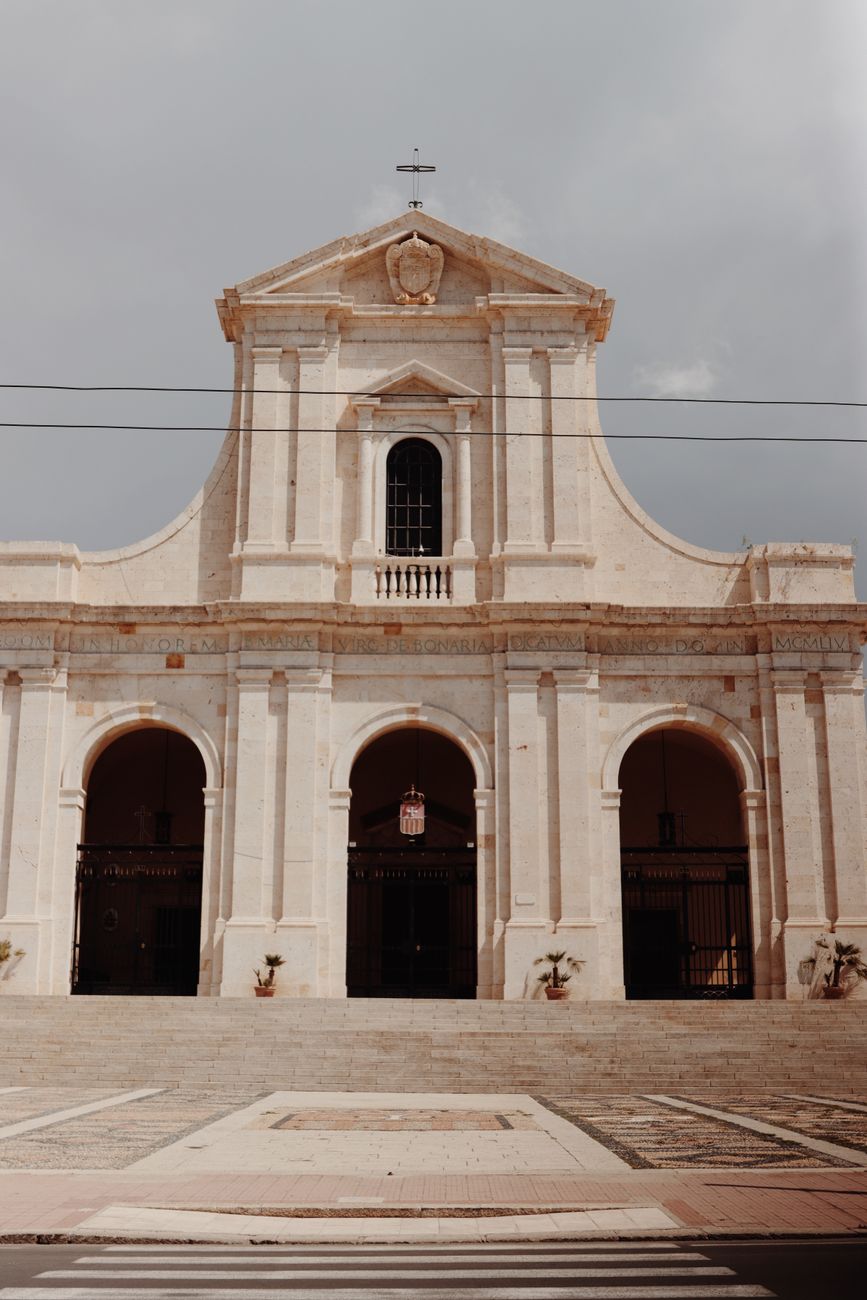
The complex is a rewarding cultural stop whether your interest is religious art, maritime traditions or the layers of Cagliari’s history. You do not need to visit every part to appreciate it, but knowing which is which makes the choice much easier.
Which part of Bonaria should you visit?
- The sanctuary: choose the smaller church if the medieval building and the wooden Madonna and Child are your priority.
- The basilica: choose the later neoclassical church if you want to see the larger religious building and contrast it with the older sanctuary.
- The sanctuary museum: add it for objects that tell a broader story, from finds on the hill to offerings left by devotees and a collection of model ships.
- The whole complex: combine the three if you want to connect the sacred image, its setting and the material evidence of devotion.
Cagliari’s tourist office lists the basilica and sanctuary at Piazza Bonaria 2, and the museum separately on Viale Bonaria. Before setting out, check current access and opening arrangements for the parts you want to see; the available descriptions do not establish a step-free route through the complex or guarantee that every interior will be open.
Sources: Church descriptions and address · Museum address and contact
The sanctuary: the older church and its Madonna
The Santuario di Nostra Signora di Bonaria is the smaller church, with origins in the 14th century. Cagliari’s tourist office describes it as Gothic-Catalan in style and identifies it as a seat of the Mercedarian order. Its central devotional object is a wooden image of the Madonna holding the Christ Child.
Sources: Sanctuary history and Madonna
For a first-time visitor, the distinction matters: the sanctuary is not simply another name for the larger basilica. If you have come specifically to understand the Madonna of Bonaria, make the older church your first choice. The image is the point around which the site’s traditions and many of its museum objects can be understood.
Treat the sanctuary as a place of worship as well as a historic monument. A quiet visit leaves room for people who are there to pray, and it helps to check local guidance before taking photographs inside.
The story of the Madonna and the sea
According to local tradition, the wooden image arrived on the shore below Bonaria in 1370. The story relates that a ship was caught in a storm and that the weather calmed after a chest containing the statue was thrown into the sea. This is a devotional tradition, not an independently established account of a miracle.
Sources: Tradition of the Madonna’s arrival
The maritime connection helps explain why sailors came to invoke the Madonna as a protector. It also gives context to the museum’s model ships and other offerings: they are not just decorative nautical objects, but part of the material culture of devotion described by the city’s museum guide.
Cagliari’s tourist office also connects the name Buenos Aires to the sanctuary: Spanish conquistadors named the settlement Puerto de Nuestra Señora de los Buenos Aires in its honour. It is a useful reminder that the story associated with this Cagliari hill travelled far beyond Sardinia, even if the legend of the statue’s arrival should be understood on its own terms.
Sources: Seafarers’ devotion and Buenos Aires
The basilica: a different building beside the sanctuary
The Basilica di Nostra Signora di Bonaria is the later church. The city describes it as neoclassical and dating from the 18th century, in contrast to the Gothic-Catalan sanctuary. The difference in date and style gives visitors a straightforward way to read the complex: the two buildings belong to the same religious setting, but they are not the same monument.
If architecture interests you, compare the two rather than treating the smaller church as an incidental annex. Start with the older sanctuary, then look at the basilica as a later expression of the site’s religious importance. If your main interest is the Madonna’s story, the sanctuary and museum may deserve more of your attention than the basilica alone.
A visit to the basilica need not become a test of architectural terminology. The useful question is simple: how does the experience of a larger, later church differ from that of the smaller medieval sanctuary? Seeing both, when access permits, makes the distinction more meaningful than either name on a map.
The museum: offerings, ships and the older hill
The Museo del Santuario di Nostra Signora di Bonaria occupies rooms beside the sanctuary and the Mercedarian convent. Its display is described as a cloister corridor and three rooms. It brings together evidence of the hill’s long history and objects associated with devotion to the Madonna of navigators.
Sources: Museum setting and collections
- In the corridor, look for painted votive pictures, other ex-votos and silver hearts. The city also lists the wooden chest associated with the Madonna’s statue.
- The first room contains archaeological evidence from the hill, including material relating to its use from the Nuragic period and as a late Punic and Roman burial ground.
- The second room is described as containing around 150 model ships from different periods, alongside other objects including a silver anchor.
- The third room holds a treasury of religious furnishings and gifts, including offerings from rulers and popes.
Sources: Museum rooms and exhibits
An ex-voto is an offering made in connection with a vow or an expression of thanks. The museum’s objects make that idea tangible: paintings, hearts, ships and precious gifts are different kinds of evidence for the ways people expressed devotion. The city also describes objects offered by freed enslaved people in connection with the Mercedarians’ work of liberation.
Sources: Votive offerings and Mercedarians
The archaeological room changes the perspective. The religious complex is one chapter in the hill’s history, not the beginning of human activity there. The finds give the visitor a reason to think about Bonaria before the sanctuary, while the votive objects bring the focus back to the people who later visited and supported it.
The museum also lists the remains of members of the Alagon family, who died of plague in 1605. This may be useful to know when deciding whether the collection suits younger visitors or anyone who would rather avoid human remains. The display described by the city is varied, so a visit can focus instead on ships, archaeology or votive art.
Sources: Alagon family remains
How to shape your visit
For a focused religious and cultural visit, begin with the sanctuary and its image, then use the museum to explore the objects associated with devotion. The story of the chest and the seafaring offerings will have more context once you know why the Madonna is important to the site.
For architecture, give the sanctuary and basilica separate attention. Compare their periods and styles before deciding whether the museum’s collection interests you. For families or groups with mixed interests, the model ships offer a clear starting point for discussing why people might leave an object at a religious site; the archaeological finds add a different subject without requiring a complete tour of Cagliari’s ancient past.
For a wider archaeology-focused day, Bonaria’s local finds can be paired conceptually with the National Archaeological Museum, whose collections cover ancient cultures across Sardinia. They are different kinds of museum: Bonaria connects finds to one hill and its devotional history, while the national museum offers a broader island context. See our Cagliari National Archaeological Museum guide for that separate visit.
If you are travelling without a car, plan the journey to the specific part of Bonaria you intend to visit rather than relying on the hill’s name alone. Our public transport guide explains how to approach an urban journey, including the final walk. Check the actual route and entrance against your mobility needs before leaving.
Frequently asked questions
Are the Bonaria sanctuary and basilica the same building?
No. The sanctuary is the smaller Gothic-Catalan church with 14th-century origins. The basilica is a later, neoclassical building. They form part of the same religious complex.
Where is the Madonna of Bonaria?
The wooden Madonna and Child is kept in the sanctuary. Tradition says the image arrived on the shore below Bonaria in 1370 after a storm at sea.
Is the Bonaria museum only about religious art?
No. Alongside votive offerings and religious furnishings, the museum describes archaeological finds from the hill and a substantial collection of model ships. It also lists human remains among its displays.
Can I visit Bonaria without entering every building?
Yes. Choose according to your interests: the sanctuary for the Madonna, the basilica for the later church, or the museum for the collections. Check current arrangements separately before relying on access to any interior.