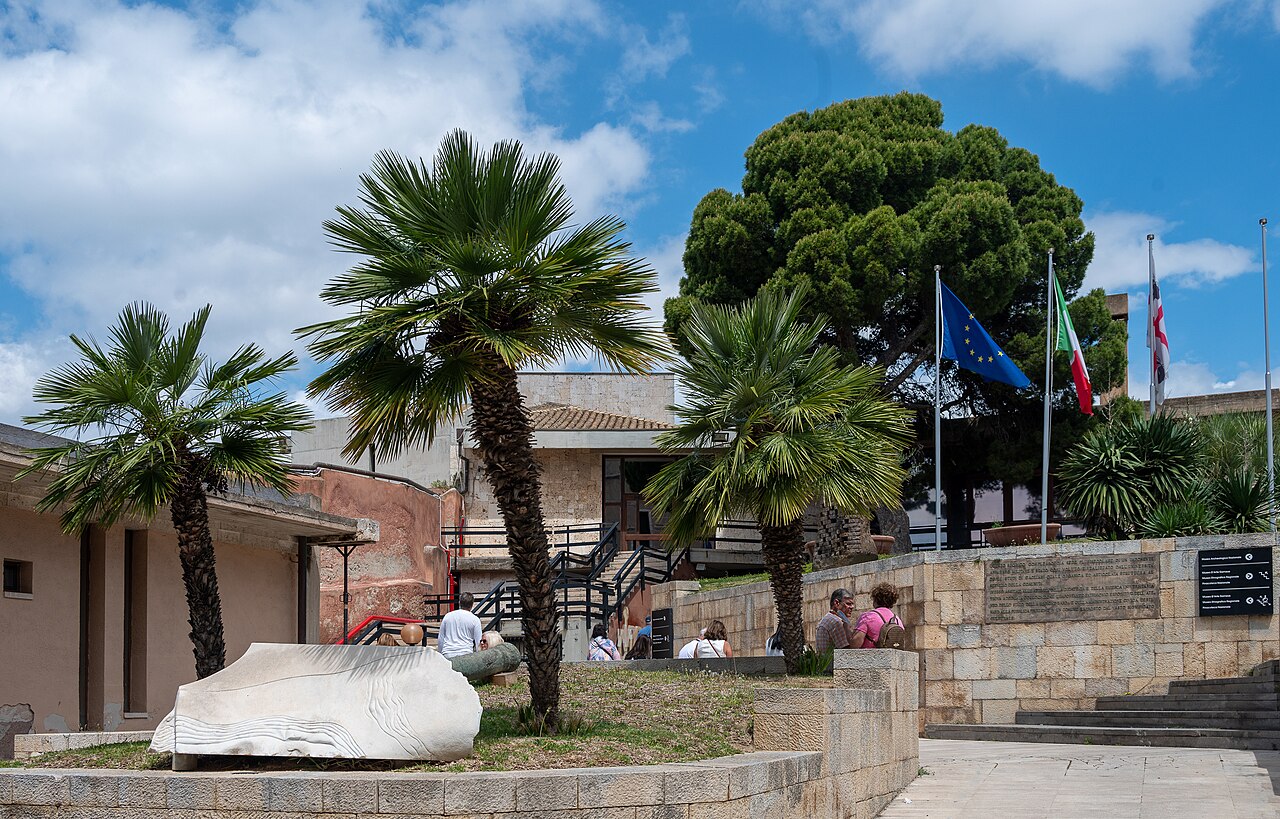

The choice is not between two versions of the same sightseeing stop. Castello gives you a historic hilltop district to explore outdoors; the museum offers a wider, earlier story through objects found across Sardinia. If your time is short, choose the walk for the setting or go inside for the archaeology. If both appeal, make the museum your main cultural stop and leave time for a shorter walk around the district.
What is in the museum?
The museum presents a succession of ancient Sardinian cultures, beginning with the Neolithic and continuing through the Nuragic, Phoenician, Punic and Roman periods. Its collection includes pottery, finely made objects, coins and the bronze figures known as bronzetti. It also brings together finds associated with individual archaeological sites, so the story is not confined to Cagliari itself.
Sources: Cagliari Turismo: chronological and site-based collections
That breadth is the main reason to visit. A first-time traveller may have heard of Sardinia’s nuraghi—the island’s ancient stone structures—but know little about the people and periods represented by its archaeology. The museum provides a way into that longer history before, after or instead of a trip to an archaeological site elsewhere on the island.
The city tourism listing describes a chronological presentation and further displays arranged by territory and site. It also reports reinstallation work affecting the route. Treat that layout as an introduction to the collection rather than a promise that every gallery or object will be available: check the museum’s current visitor information before making a special trip.
The Nuragic bronzetti: a reason to go inside
The Nuragic collection is a compelling starting point if you have room for only one theme. The museum’s bronzetti are small bronze figures, with examples gathered from across Sardinia. They give a different scale to the island’s ancient past: rather than looking at a large stone monument in the landscape, you can look closely at objects made on a much smaller scale.
Sources: Cagliari Turismo: Nuragic bronzes
Take a little time with the figures rather than trying to remember each name. Compare their shapes and details, then read the information provided beside the examples that catch your attention. The contrast between the figures and the other objects around them can help turn “Nuragic” from an unfamiliar label into a more tangible part of the island’s history.
For a visitor who plans to see a nuraghe elsewhere in Sardinia, the collection can add context to the journey. For someone staying only in Cagliari, it offers an introduction without requiring a separate excursion. Neither experience replaces the other: a museum object and an archaeological structure answer different questions about the past.
From the Neolithic to Rome
The earlier material places the Nuragic period within a longer sequence. The city’s description of the chronological collection begins with Neolithic cultures and continues through later prehistoric groups. You do not need to memorise every cultural name to make the visit rewarding: notice that the Nuragic chapter is one part of a much longer history of people on the island.
The Phoenician, Punic and Roman collections introduce further chapters in Sardinia’s ancient history. The museum listing highlights characteristic ceramics and finely crafted objects, as well as Punic and Roman coins. Look for the materials and forms of the objects, and use their labels to understand where they were found and how they fit into the museum’s sequence.
Sources: Cagliari Turismo: Phoenician, Punic and Roman material
This is a useful way to approach an unfamiliar collection without turning the visit into a test. Pick a few objects from different periods and ask the same questions of each: what is it made from, where was it found, and what does the museum say about it? Comparing a ceramic object with a coin or a bronze figure can make the changing evidence easier to follow.
Finds from places across Sardinia
The museum also groups material by archaeological site. The city listing identifies displays associated with Su Nuraxi at Barumini, the sanctuary of Antas, and the Phoenician sites of Sulci and Monte Sirai. These names are useful reference points if you are planning more than a city break, or if you simply want to see how the island’s history extends beyond Cagliari.
A site-based display asks a different question from a chronological one. Instead of moving from period to period, you can concentrate on one place and the objects found there. If a particular site is already on your itinerary, its material may give you a reason to linger; if not, choose one name that interests you and follow it through the information available.
Museum or Castello walk: which should you choose?
Choose the museum when your main interest is ancient Sardinia, especially if you want to see objects rather than just read about archaeological periods. It is also the better use of your time if Nuragic bronzes are a priority or you want an indoor cultural stop with a clear subject.
Choose an outdoor Castello walk when your priority is the character of the hilltop district: its streets, fortifications and setting above the lower city. The walk is easier to adapt if you would rather move between a few outdoor stops than spend your available time with a collection. It will not, however, give you the same close look at the museum’s archaeological material.
For a mixed visit, decide on your museum time first, then use the Castello walking route to choose a manageable outdoor section. You do not need to complete the whole neighbourhood route to make the pairing worthwhile. Grouping the two also avoids treating the museum as an afterthought at the end of a full day.
How to plan your visit
Go to Piazza Arsenale and look for the museum within the Cittadella dei Musei. Before setting out, consult the museum’s current information for opening arrangements, tickets and the areas available during the reinstallation. If a particular collection is the reason for your visit, ask the museum about it rather than assuming it will be on display.
A focused visit can follow one thread: start with the Nuragic material, then compare it with objects from a later period. If you have more time, add a site-based display and read about the place behind the finds. Leave some flexibility rather than trying to see every object; the collection covers a broad span and is easier to absorb in selected themes.
Castello is an elevated district, so consider the approach as well as the time indoors. Grouping upper-city stops together can reduce repeated climbs. If you are visiting without a car, the wider car-free guide helps with the day’s transport choices; check the final approach to Piazza Arsenale against your own mobility needs.
Accessibility and visitor facilities
The city tourism listing describes an external ramp from the Cittadella entrance to the museum, internal ramps and a lift connecting the exhibition floors. It also lists a tactile map at the complex entrance, seating areas, and wheelchairs and walking sticks with seats available on request at the ticket office.
Those facilities are useful starting points, but they do not describe every visitor’s route from elsewhere in the city. If a particular access feature is essential, contact the museum before visiting to confirm that it meets your needs and is available on your date.
Frequently asked questions
Where is the National Archaeological Museum in Cagliari?
It is in Piazza Arsenale, within the Cittadella dei Musei in the Castello area. It can be combined with a walk in the upper historic district.
What are the bronzetti?
Bronzetti are small Nuragic bronze figures. The museum’s collection includes examples from across Sardinia, making them a useful introduction to the island’s Nuragic past.
Is the museum only about the Nuragic period?
No. Its collections cover a longer sequence, from Neolithic cultures through Nuragic, Phoenician, Punic and Roman periods. They also include material associated with individual sites around Sardinia.
Should I visit the museum if I have already walked around Castello?
Yes, if you want to learn about ancient Sardinia through archaeological objects. The outdoor walk and the collection offer different perspectives, so one does not substitute for the other.
Can I count on seeing every gallery?
The city’s museum listing reports reinstallation work affecting the route. Check current visitor information and contact the museum if a particular display is essential to your plans.