
The quick comparison
| Comparison point | National Archaeological Museum | Bonaria sanctuary museum |
|---|---|---|
| Choose it for | A broad introduction to ancient Sardinia | Devotion, maritime connections and local history |
| What stands out | Nuragic bronze figures, ceramics and finds from archaeological sites | Votive offerings, model ships, sacred objects and finds from Bonaria hill |
| Setting | Cittadella dei Musei, Piazza Arsenale | Beside the sanctuary and Mercedarian convent, Viale Bonaria |
| Visit style | A larger collection to explore selectively or in depth | A focused collection in a cloister corridor and three rooms |
Sources: Cagliari Turismo: National Archaeological Museum · Cagliari Turismo: Bonaria sanctuary museum
If you have time for only one, let the subject decide rather than trying to identify a universal winner. The archaeological museum is the stronger starting point for a first encounter with the island's ancient past. Bonaria is more compelling if you are interested in the relationship between a religious place, its community and the sea.
National Archaeological Museum: for the big picture
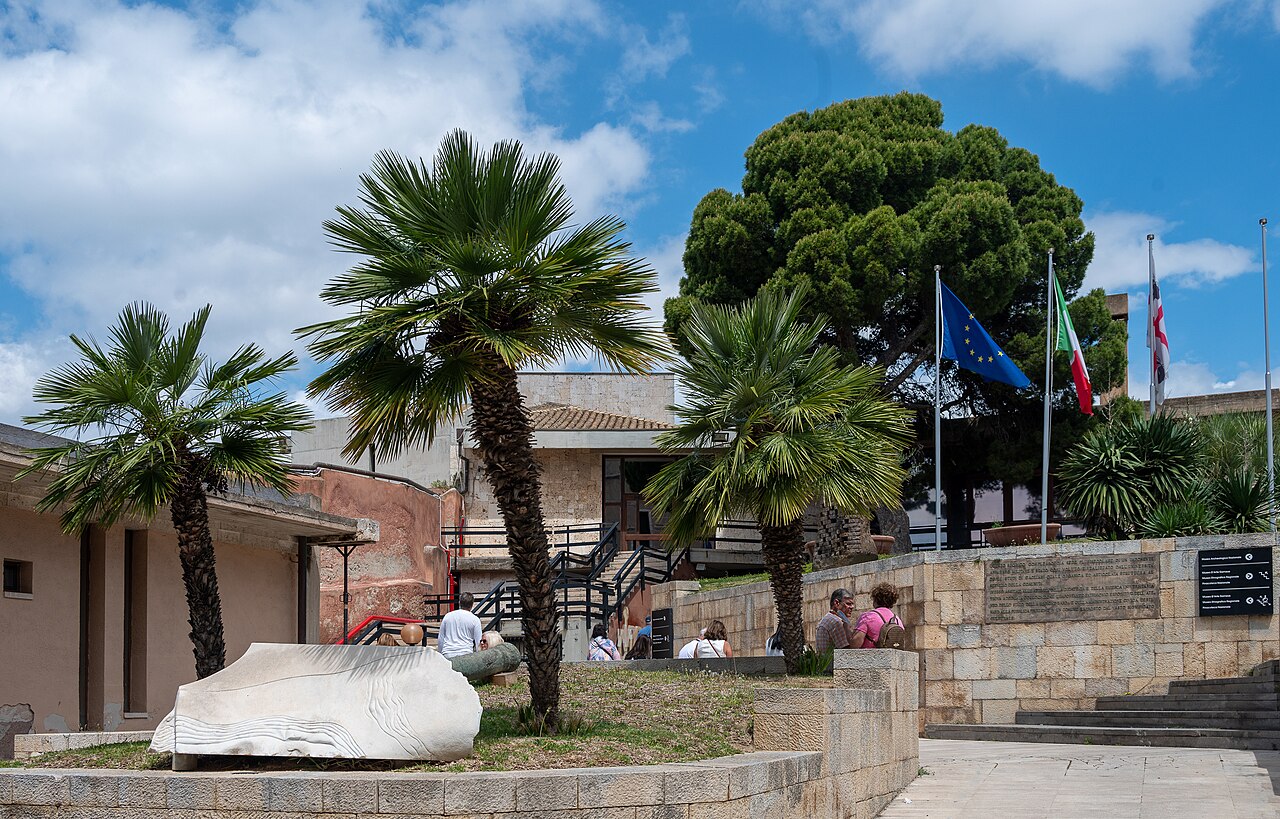
The Museo Archeologico Nazionale is at the Cittadella dei Musei in Piazza Arsenale. Its collection introduces successive ancient cultures of Sardinia, from the Neolithic period through the Nuragic, Phoenician, Punic and Roman periods. For a traveller who has encountered the name “Nuragic” but does not yet know what it refers to, this is a useful place to begin putting the island's archaeological history into context.
Sources: Museum location and collections
Among the objects highlighted by Cagliari's tourism office are the bronzetti, small Nuragic bronze figures from across the island, as well as ceramics, crafted objects and coins. The museum also presents finds by archaeological site, including material from Su Nuraxi at Barumini, the sanctuary of Antas and the Phoenician towns of Sulci and Monte Sirai. The result is not simply a history of the city: it offers context for places beyond Cagliari too.
For a shorter visit, make the chronological display your starting point and select a few objects or periods that interest you. If you have more time, follow the site-based displays to see how the story changes from place to place. You do not need to study every case to leave with a useful sense of the range of cultures represented.
The collection is described across four floors, but the city tourism page notes that a reinstallation is under way and affects the start of the route. Check the museum's current information before visiting rather than assuming every display will be presented exactly as described. The same check is worthwhile for opening arrangements and any temporary changes.
Bonaria sanctuary museum: for faith and the sea
The Museo del Santuario di Nostra Signora di Bonaria sits beside the sanctuary and the convent of the Mercedarian friars. Its exhibits occupy a cloister corridor and three rooms. This is a more concentrated choice than the archaeological museum: the collection follows the history of Bonaria hill and devotion to the Madonna associated with the sanctuary, rather than attempting an island-wide survey.
Look for the ex-voto: objects given as expressions of thanks or devotion. The collection includes votive paintings and silver hearts, alongside numerous model ships. The maritime objects make a particularly clear connection between the sanctuary and devotion among seafarers. There are also sacred furnishings and archaeological evidence from the hill, including material associated with its late Punic and Roman burial ground.
Sources: Bonaria votive, maritime and archaeological collections
The collection also includes mummies of members of the Alagon family. That may be useful to know when deciding whether the visit suits children or anyone who would rather avoid human remains. The museum's appeal is not limited to one type of object: its small scale brings together archaeology, devotional art and maritime history in the setting that connects them.
Museum or sanctuary: what is the difference?
Bonaria's museum is separate from the religious buildings beside it. The complex includes a small Gothic-Catalan sanctuary with fourteenth-century origins and a later neoclassical basilica. The sanctuary houses a wooden Madonna and Child; according to local tradition, the statue arrived on the shore below Bonaria in 1370 after a storm at sea. The story helps explain the maritime devotion reflected in the museum's offerings.
If the religious setting is your main interest, consider the museum and sanctuary as related but distinct visits. Confirm their current opening arrangements separately before you go: seeing the exterior of the complex does not guarantee access to the museum or sanctuary interiors. A visit to the sanctuary is also a visit to a place of worship, so allow space for people there for religious reasons.
How to choose with limited time
For one museum stop on a first weekend, pick the archaeological museum if you want an overview that will give historical context to the rest of your trip. Decide in advance whether your priority is the chronological introduction or a particular period such as the Nuragic age. That gives a short visit a purpose without making it a race through every floor.
Pick Bonaria when you would rather explore one place and its stories in detail. Its corridor and three rooms make the scope easier to grasp before arrival, while the nearby sanctuary provides a related architectural and religious context. The smaller exhibition does not automatically mean a fixed visit duration: your interest in the objects and any separate sanctuary visit will shape the time you spend.
If you have room for both, treat them as complementary rather than interchangeable. Start with the archaeological museum for the longer sweep of ancient history, then visit Bonaria for a more specific story of the hill and its devotional objects. Alternatively, reverse the order if your available opening windows make that easier; neither visit depends on having completed the other.
Fit a museum into a Cagliari day
The archaeological museum can be paired with time in Castello, Cagliari's historic hilltop district. Keep the museum as the main indoor stop and use the Castello walking route to choose how much of the surrounding area to add. This is a more flexible plan than trying to complete a full walking itinerary and every museum display in one uninterrupted visit.
For Bonaria, make the museum and sanctuary complex the focus rather than treating it as an anonymous stop between other attractions. Check the exact entrance and current arrangements for each part you want to see, then leave room to look at the objects that most interest you. If your group has different interests, the model ships, archaeological material and sacred objects offer distinct points of entry into the same collection.
Neither choice requires a car simply because it is a museum visit. If you are planning a car-free stay, work out the complete journey to the chosen entrance, including any walking and slopes, rather than relying on a neighbourhood name. The wider car-free guide can help you combine a cultural day with the rest of your city plans.
Accessibility and choosing a comfortable visit
Cagliari's tourism office describes ramps, an elevator connecting the archaeological museum's exhibition floors, seating areas and a tactile map at the Cittadella entrance. It also says wheelchairs and walking sticks with seats can be requested at the ticket office. If any of these facilities is essential to your visit, contact the museum about current arrangements and the approach you intend to use.
The supplied Bonaria museum information describes the exhibition spaces but does not establish a step-free route or facilities. Ask the museum directly about the entrance and any assistance you need before making it your main plan. For either museum, choosing fewer displays and allowing breaks can make the visit more enjoyable than trying to cover everything.
Frequently asked questions
Which Cagliari museum is best for a first-time visitor?
The National Archaeological Museum is a good first choice for a broad introduction to ancient Sardinia. Choose the Bonaria sanctuary museum instead if religious traditions, model ships and the history of a particular place interest you more.
Can I visit a museum and explore Castello on the same day?
Yes. The National Archaeological Museum is at the Cittadella dei Musei, making it a natural cultural stop to combine with Castello. Choose a shorter selection of walking stops or museum displays if your time is limited.
Is the Bonaria museum the same as the basilica?
No. The museum is beside the sanctuary and convent; the religious complex also includes a separate basilica. Check arrangements for each interior you want to visit.
What can children see at these museums?
The archaeological museum has small bronze figures and other ancient objects, while Bonaria has model ships and votive offerings. Bonaria also displays human remains, which parents may want to consider when choosing the visit.