These are regional examples, not a list of dishes proven to have originated in Cagliari or a promise that they will appear on a particular menu. The available evidence does not establish the ingredients or local associations of specific named Cagliari seafood recipes.
Bottarga: a cured ingredient rather than a fish main
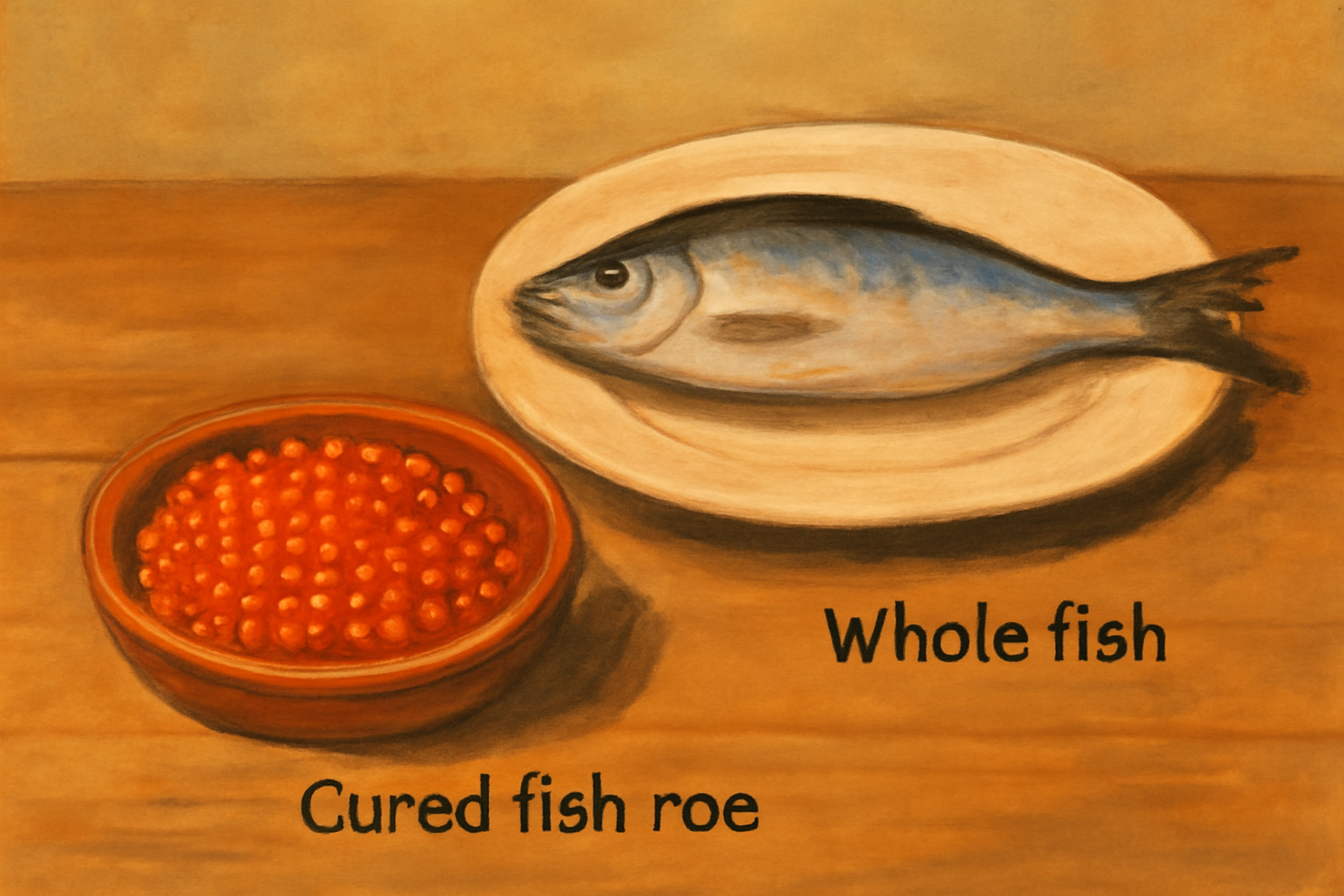
Bottarga is fish roe preserved by salting and curing. If it appears in a dish description, it tells you about an ingredient, not the complete preparation: read the rest of the entry to see what accompanies it. Ask the restaurant if the menu does not make that clear.
Sources: SardegnaTurismo: bottarga
That distinction matters when choosing between dishes. A plate described by its fish may be centred on that fish; a plate mentioning bottarga may use the cured roe as one component. The name alone does not tell you the quantity, accompaniments or how the kitchen has used it.
If you want to try bottarga but do not know what the rest of the dish involves, ask what the main element is and how the roe is served. That gives you a more useful basis for choosing than treating bottarga as the name of a complete recipe. If you would rather have a fish-centred main, look for the fish itself in the description and ask about its preparation.
Fish and seafood: check the preparation
SardegnaTurismo names sea bass, sea bream and tuna among fish used in Sardinian cooking, alongside crustaceans. It also gives char-grilled eel as an example of a preparation. These references are useful starting points for recognising ingredients, but they do not specify a single recipe for each fish.
Sources: SardegnaTurismo: fish dishes
If the menu names a fish but gives little else, ask how it is cooked and what comes with it. This is especially useful when you are deciding between a straightforward fish dish and a preparation with several components. A fish name answers what the main ingredient is; it does not, by itself, answer whether the plate has a sauce or other additions.
Eel shows why the distinction matters. The regional overview describes char-grilling, but an entry that simply says eel does not tell you that this is the method used for that particular plate. Ask whether it is grilled or prepared another way, then decide if that preparation appeals to you.
Sources: SardegnaTurismo: char-grilled eel
A broad word such as crustaceans leaves a different question unanswered: which ones? If the entry does not identify them, ask the restaurant to name the seafood in the dish. You can then compare that answer with a specific fish listed elsewhere on the menu, rather than assuming both descriptions provide the same level of detail.
Useful Italian words on the menu
Italian names can help you recognise the ingredient before you ask about the recipe. The following are translations, not claims that a particular restaurant serves these items or prepares them in a particular way.
| Italian menu word | Meaning | What remains to check |
|---|---|---|
| Bottarga | Salted, cured fish roe | What else is in the dish and how the roe is used |
| Branzino or spigola | Sea bass | Cooking method and accompaniments |
| Orata | Sea bream | Cooking method and accompaniments |
| Tonno | Tuna | How it is prepared and served |
| Anguilla | Eel | Whether it is grilled or prepared another way |
| Crostacei | Crustaceans | Which kinds are included |
The preparation words matter too. Alla griglia means grilled; al forno means baked or oven-cooked; fritto means fried. If one of these appears beside the ingredient, it gives you a useful first clue. It still may not tell you about a sauce, garnish or other ingredients, so read the full description.
A menu may give a name without an English explanation, or an English description without much detail. Either way, start with the ingredient, then look for the cooking method. If you can identify only one of those two things, the missing half is a good question to put to the server.
A quick way to compare menu descriptions
| Menu clue | What it tells you | What to ask if needed |
|---|---|---|
| Bottarga | Salted, cured fish roe is an ingredient. | What else is in the dish, and how is the bottarga used? |
| Sea bass, sea bream or tuna | The menu identifies a fish. | How is it cooked, and what accompanies it? |
| Eel | The menu identifies the fish; a regional tourism overview gives char-grilling as one preparation. | Is this particular dish grilled or prepared another way? |
| Crustaceans | The description points to a seafood category rather than necessarily identifying the exact ingredient. | Which seafood is included, and how is it prepared? |
For example, if one entry mentions bottarga and another names sea bream, decide first whether you want a dish containing cured roe or a fish-centred plate. Then use the descriptions and the restaurant’s answers to compare the actual preparations. Neither name alone tells you everything that will arrive at the table.
Choose between a fish main and a dish with seafood
For a fish main, begin by identifying the fish and the cooking method. If you see orata alla griglia, for example, the words tell you that the sea bream is grilled. Ask what accompanies it if that affects your choice. You can also ask whether it is served whole or as a fillet if you have a preference.
For a dish that includes seafood among other ingredients, read the whole entry before deciding. The useful question is not just “Which seafood?” but also “What is the rest of the dish?” An ingredient can be the reason you notice an entry without being the entire meal. Ask how the components are combined if the description is brief.
If you are choosing between two fish, the name alone may not settle the decision. A preference for grilled food, a particular accompaniment or a fillet rather than a whole fish can be more useful than trying to rank the species. Ask about the two actual plates and choose the one whose preparation sounds closer to what you want.
Questions worth asking before ordering
- What is the main seafood ingredient in this dish?
- How is it cooked, and is there a sauce?
- What comes with it?
- If bottarga is listed, how is it used in this preparation?
- If the description says seafood or crustaceans, which kinds are included?
- If the dish is a fish main, is the fish served whole or as a fillet?
You do not need to ask every question for every dish. Pick the one that resolves your decision: cooking method if you prefer grilled food, the exact seafood if the description is broad, or accompaniments if you are comparing two mains. Pointing to the menu entry can make the question easier when you are unsure how to pronounce its name.
Ask directly about any ingredient you need to avoid rather than relying on a short menu description. The kitchen can explain its own preparation; the name of a dish cannot establish every ingredient used in it.
For a wider introduction beyond seafood, see the guide to Sardinian food in Cagliari, which also covers pasta, breads and sweets.
Frequently asked questions
What is bottarga?
Bottarga is salted, cured fish roe. On a menu, the word identifies an ingredient; check the rest of the description or ask how it is used in the dish.
Are sea bass and sea bream specifically Cagliari specialities?
SardegnaTurismo names both among fish used in Sardinian cuisine, but its regional overview does not establish either as a specifically Cagliari speciality.
Does a fish name on a menu explain how it is cooked?
Not necessarily. If the description is brief, ask the restaurant about the cooking method, sauce and accompaniments before ordering.
What does alla griglia mean?
It means grilled. If it appears next to a fish name, it describes the cooking method, but you may still want to ask what comes with the fish.