Cagliari is a useful place to encounter both local cooking and traditions from elsewhere on the island. That does not make every Sardinian speciality a Cagliari invention. Use the names below as a way to understand a menu, not as a promise that a particular dish will be available wherever you eat.
A quick guide to the names
| Menu name | What to expect | Choose it if |
|---|---|---|
| Fregula con cocciula | Semolina pasta balls with clams | You want a Cagliari-associated seafood pasta |
| Burrida | Catshark and walnuts | You want to try a local fish speciality |
| Spaghetti with bottarga and artichokes | Pasta with cured fish roe and artichokes | You are curious about bottarga |
| Malloreddus or culurgiones | Sardinian pasta; malloreddus is dried and culurgiones is fresh | You want a pasta choice beyond spaghetti |
| Roast suckling pig | A Sardinian meat dish | You prefer a meat-centred main |
| Seada or sebada | Fried pastry filled with cheese and finished with honey | You want a sweet with a savoury-cheese contrast |
Sources: SardegnaTurismo: Sardinian cuisine · SardegnaTurismo: Cagliari seafood dishes · SardegnaTurismo: traditional sweets
The comparison describes the dishes, not a fixed sequence of courses. Menus and preparations differ, so read the accompanying description and ask what comes with the version being served.
Begin with Cagliari’s seafood dishes
Fregula con cocciula is a good first name to learn because it brings two useful terms together. Fregula, also written fregola, is a Sardinian pasta; in this Cagliari dish it appears as small semolina balls with clams. It is pasta rather than a grain dish, even if the little pieces look different from the long or tubular shapes familiar elsewhere in Italy.
Sources: SardegnaTurismo: fregula with clams
Burrida is another local dish identified by the regional tourism authority. Its named ingredients are catshark and walnuts. If you are choosing between burrida and fregula con cocciula, the useful distinction is fish with walnuts versus pasta with shellfish. Ask for the preparation if you want a fuller picture before ordering; the short name alone does not describe the whole plate.
Sources: SardegnaTurismo: burrida
Bottarga means salted, cured fish roe. The Cagliari tourism guide describes a spaghetti dish with bottarga, made from mullet or tuna roe, and artichokes. Bottarga is an ingredient rather than the name of one complete dish: when you see it on a menu, check what it accompanies. If you would rather avoid fish or shellfish, neither bottarga nor clam fregula is the right starting point.
Sardinian pasta beyond the city
Fregula is only one of several pasta names worth recognising. SardegnaTurismo lists fregola and malloreddus among the island’s dried pastas, and culurgiones, filindeu and lorighittas among its fresh pastas. These are Sardinian traditions, not all specifically Cagliari dishes.
On a short visit, choose the pasta according to the full dish rather than the name alone. A menu may tell you the accompaniment or filling; if it does not, ask. Knowing that culurgiones is a fresh pasta or malloreddus a dried one is a useful starting point, but it does not establish the ingredients of every preparation.
For a meal centred on Cagliari, fregula with clams makes the strongest connection to the city in this guide. For a wider island perspective, pick one of the other named pastas and find out how the kitchen serves it. Either way, the description after the pasta name matters as much as the name itself.
Meat, cheese and other regional ingredients
Sardinian food is not limited to seafood. Regional meat dishes include roast suckling pig, lamb and goat, as well as boiled mutton and cordula, made with goat intestines. Roast suckling pig is an accessible name to look for if you want a meat-focused meal; cordula is a more specific choice for someone interested in less familiar cuts.
Pecorino, a sheep’s-milk cheese, appears among the island’s traditional products, alongside Fiore Sardo and fresh or matured cheeses. Bottarga, artichokes and saffron are other ingredients highlighted by the regional tourism authority. Recognising an ingredient can help you decode a dish even when the menu name itself is unfamiliar.
If you have a dietary restriction, ask about the complete preparation rather than relying on a dish name. Pasta, bread and cheese dishes can have accompaniments that are not obvious from their names; the person serving the dish is best placed to explain the particular version.
Bread tells a regional story
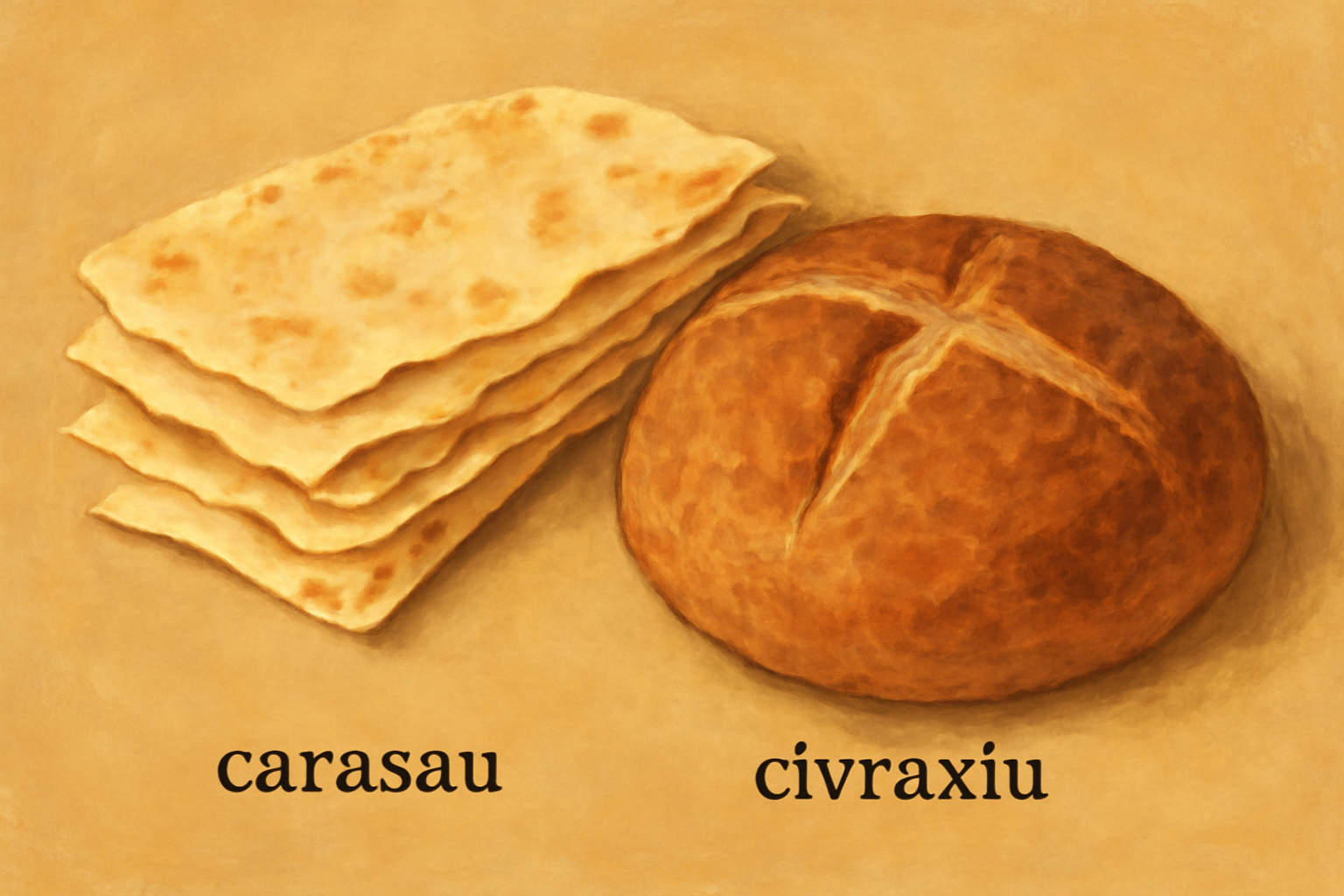
Pane carasau is the thin, crisp bread associated with the Barbagia areas of central Sardinia. It is baked twice, a process the regional tourism guide connects with its long keeping qualities and the extended absences of shepherds. Its alternative name, carta da musica, refers to the sound of the crisp sheets.
Civraxiu, also written civraxu, offers a useful contrast. It is a large everyday bread of southern Sardinia and the Campidano plain, particularly associated with Sanluri. Think of it as a different regional bread tradition, not simply a thicker version of carasau. Southern breads are generally larger, while many centre-northern traditions favour thinner forms.
Bread can also be part of a dish. Pane frattau uses layers of carasau soaked in hot broth, with tomato sauce, pecorino and a poached egg. Pane guttiau is a simpler carasau variation, lightly toasted with oil and salt. The difference matters when ordering: one is a substantial layered preparation; the other is seasoned bread.
Finish with a Sardinian sweet
A seada, also called sebada, is made from two layers of pastry enclosing a tangy melted-cheese filling, scented with orange or lemon zest. It is fried and served warm with honey. The regional tourism source associates its roots with the pastoral culture of Barbagia, rather than specifically with Cagliari.
For a southern Sardinian contrast, look for pardulas: small pastry cases commonly filled with ricotta scented with lemon and saffron in Campidano and Sulcis. Related casadinas in Barbagia and Logudoro use fresh cheese and raisins. The names and fillings show why it is worth asking about the particular sweet rather than assuming every cheese pastry is the same.
Two sweets have a closer Cagliari connection in the regional source. Papai biancu is a milk pudding sweetened with almond and lemon, documented there as being made in medieval Cagliari. Pastissus are delicate pastries associated with the Cagliari area, with thin pastry and a soft almond filling. Explore the separate Sardinian sweets and pastries guide for more on these and other traditional treats.
How to choose on a short stay
For one meal with a clear city connection, start by looking for fregula con cocciula, burrida or the spaghetti with bottarga and artichokes. Choose among them by ingredient: clams, catshark and walnuts, or cured roe and artichokes. If none appeals, a regional pasta or meat dish still offers a meaningful introduction to Sardinian cooking.
With more than one meal, vary the starting point. A seafood dish followed on another occasion by roast suckling pig, a different pasta or pane frattau gives you a broader picture than repeating the same category. Finish with seada if the cheese-and-honey combination appeals, or choose a southern sweet such as pardula for another regional comparison.
Finally, let the menu fill in the details. Ask what a dish contains, how it is prepared and what accompanies it. This is especially useful when a familiar Sardinian name appears without a description: it keeps your choice tied to the meal in front of you rather than to an assumed standard recipe.
Frequently asked questions
What is a typical dish to try in Cagliari?
Fregula con cocciula is a Cagliari-associated dish of small semolina pasta balls and clams. Burrida, made with catshark and walnuts, is another local speciality.
What is the difference between fregula and bottarga?
Fregula is Sardinian pasta, while bottarga is salted, cured fish roe. In Cagliari, fregula is associated with a clam dish; bottarga appears in a local spaghetti dish with artichokes.
Is pane carasau from Cagliari?
Carasau is associated with the Barbagia areas of central Sardinia. Civraxiu is a large everyday bread more closely associated with southern Sardinia and Sanluri.
What sweet should I look for after a Sardinian meal?
Try a seada if warm fried pastry, tangy cheese and honey appeal. For a different southern tradition, pardulas are small pastries commonly filled with ricotta, lemon and saffron in Campidano and Sulcis.