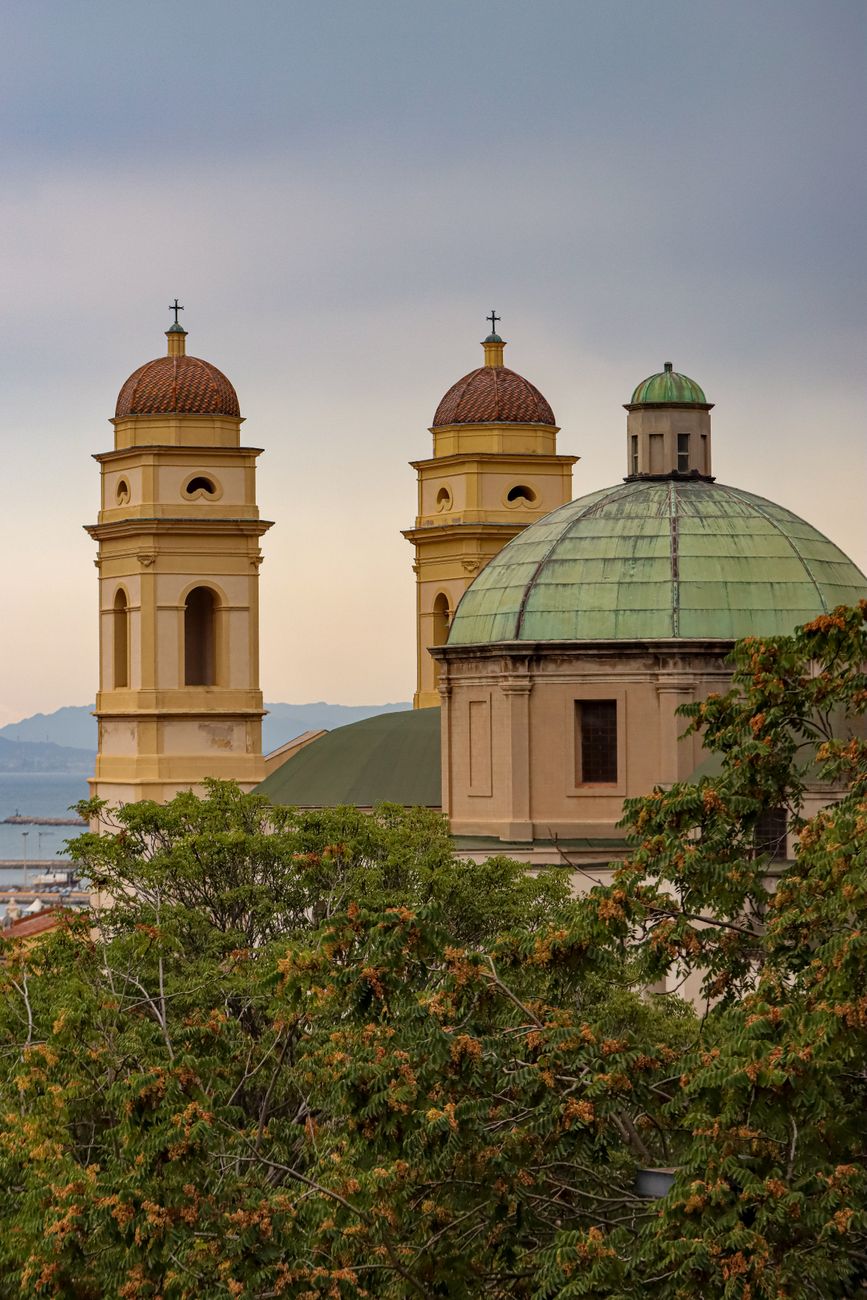
Stampace is also associated with the annual Sant’Efisio festival in May, an important part of its cultural identity. You do not need to visit during the festival to appreciate the neighbourhood, but knowing that connection adds context to a walk centred on its streets and religious landmark.
A simple way to explore Stampace
Use this as a sequence of places and choices, not a signed trail. Begin with Sant’Anna and the surrounding streets; if you have more time, choose one of the nearby extensions below. The precise street-by-street connections between the stops have not been verified, so consult a current map before setting off.
- Start at the Church of Sant’Anna and take in its setting within Stampace.
- Spend some time exploring the neighbourhood’s narrow streets before moving on.
- Add the Roman amphitheatre for an ancient-history focus, or the Botanical Garden for a change of setting.
- If you want both extensions, treat each as a separate visit rather than a quick stop on a fixed circuit.
Before making an interior visit the centrepiece of your day, check current admission arrangements directly with the relevant venue. A neighbourhood walk and entry to a church, archaeological site or garden are different plans; this guide does not promise access to any interior.
Sant’Anna and the streets of Stampace
Sant’Anna is the most useful place to orient this short walk. Sardinia’s regional tourism guide identifies the church as Baroque and places it among Stampace’s narrow streets. Rather than treating it as an isolated monument, use it to focus on the contrast between a prominent religious building and the smaller-scale streets around it.
A rewarding approach is to pause at the church, then explore the surrounding streets before returning to your map. Keep the outing deliberately open-ended: you can pay attention to the street setting without needing every turn to lead to another named attraction. If you prefer a more structured day, Sant’Anna also makes a clear point from which to choose your next cultural stop.
This focus is useful if your time is limited. Instead of trying to cover every historic district at once, give Stampace its own short outing. The church provides a recognisable starting point; the streets make the neighbourhood itself part of the visit, rather than simply a route between monuments.
The Sant’Efisio connection
Stampace is the setting for the annual festival of Sant’Efisio in May, which the regional tourism authority describes as an event enjoyed across the island. That association adds another dimension to the neighbourhood: it is not only a place to look at architecture, but also a place connected to a continuing religious celebration.
Sources: SardegnaTurismo: the annual festival
If your visit falls around the festival, look for the programme for the particular year before organising your day around it. The annual connection is useful background at any time, but it should not be mistaken for a confirmed timetable or a promise that you will see a procession during your visit.
For a visitor outside the festival period, the connection still offers a way to read the district: Sant’Anna is one landmark within a neighbourhood whose identity also includes a shared religious celebration. The building and the festival are different aspects of Stampace, not substitutes for one another.
Add the Roman amphitheatre or Botanical Garden
The regional tourism guide recommends both the Roman amphitheatre and the Botanical Garden near Stampace. They are not interchangeable stops: one extends the walk towards ancient history, while the other changes its emphasis from neighbourhood streets to a garden setting. Pick according to what you want from the rest of the day, rather than assuming you must fit in both.
| Choice | Why add it | How it changes the outing |
|---|---|---|
| Roman amphitheatre | A major Roman archaeological landmark | Adds an ancient-history focus to the neighbourhood walk |
| Botanical Garden | A green space in central Cagliari | Adds a garden visit after the streets and church |
| Both | A broader cultural outing | Requires separate planning for each stop and any interior visit |
Choose the amphitheatre if Roman Cagliari is what draws you on. The regional guide identifies it as one of Sardinia’s important Roman remains. Its value in this outing is the change in historical focus: after a Baroque church and the surrounding neighbourhood, you are considering a monument from the Roman period. Treat the archaeological site as a separate destination, not as a guaranteed interior visit included in a street walk.
Sources: SardegnaTurismo: Roman amphitheatre
Choose the Botanical Garden if you would enjoy a change of pace after the neighbourhood. SardegnaTurismo describes it as a green oasis in central Cagliari, making it a different sort of stop from either the church or the amphitheatre. The Botanical Garden guide can help you decide whether to make it a substantial visit rather than a brief addition to your walk.
Sources: SardegnaTurismo: Botanical Garden
If you are interested in both options, decide which one matters most before you leave. That gives you an easy way to shorten the outing if you spend longer in Stampace than expected. It also lets you approach the second stop as a choice, rather than rushing through the first simply to complete a list.
How Stampace differs from Castello and Marina
Stampace is a good choice when you want a walk built around a neighbourhood church, narrow streets and the Sant’Efisio connection. Castello offers a different emphasis: the regional guide places it on the city’s highest hill and highlights its bastions, historic buildings and medieval towers. Choose Castello when the fortified hill and its monuments are the main attraction.
Sources: SardegnaTurismo: Castello
Marina, below Castello, brings another setting again: Via Roma’s porticoes, the port-side district and Sant’Eulalia’s Roman remains. If you have already explored Marina, Stampace is a way to see a different historic quarter rather than repeat the same walk. The Castello walking guide and Marina walking guide are useful if you want to give either district its own outing.
Sources: SardegnaTurismo: Marina
The distinction can help with a short stay. Choose Stampace for the church and neighbourhood setting, Castello for the fortified hill, or Marina for the lower, port-side streets. These are different starting points for exploring the city, not a ranking of its historic quarters. If one setting interests you more, give it the time rather than trying to sample all three in a single hurried walk.
Fit the walk to your visit
For a short visit, keep the focus on Sant’Anna and the surrounding streets. This is the simplest version: it leaves room to observe the neighbourhood without making the day depend on multiple attractions. You can then decide whether you want a further stop.
For a longer outing, allow time for the extension that best matches your interests and for the journey between stops. If you are also planning another district walk, consider whether you would rather spend the extra time in Stampace or give Castello or Marina a separate outing. The choice depends on how much you want to see of each place, not just how many names fit on an itinerary.
If walking conditions matter to you, inspect the actual route and entrances on a current map before committing to the full sequence. The neighbourhood name alone cannot tell you whether a particular approach or venue entrance meets your needs. Keeping Sant’Anna as the focus and treating the other sights as optional makes the walk easier to adapt.
Frequently asked questions
What should I see on a short walk in Stampace?
Centre the walk on the Baroque Church of Sant’Anna and the neighbourhood’s narrow streets. If you have more time, choose the nearby Roman amphitheatre or Botanical Garden as a separate extension.
Is Stampace connected to the Sant’Efisio festival?
Yes. Stampace is associated with the annual festival held in May. Check the programme for your particular year if you want to plan around the celebration.
Can I combine Stampace with the Botanical Garden?
Yes. SardegnaTurismo identifies the garden as a nearby sight. Check its current visitor arrangements and map the connection from your chosen starting point.
Is this a turn-by-turn walking route?
No. It is a flexible sequence of landmarks and nearby options. The precise street-by-street connections have not been verified, so use a current map for the route between them.