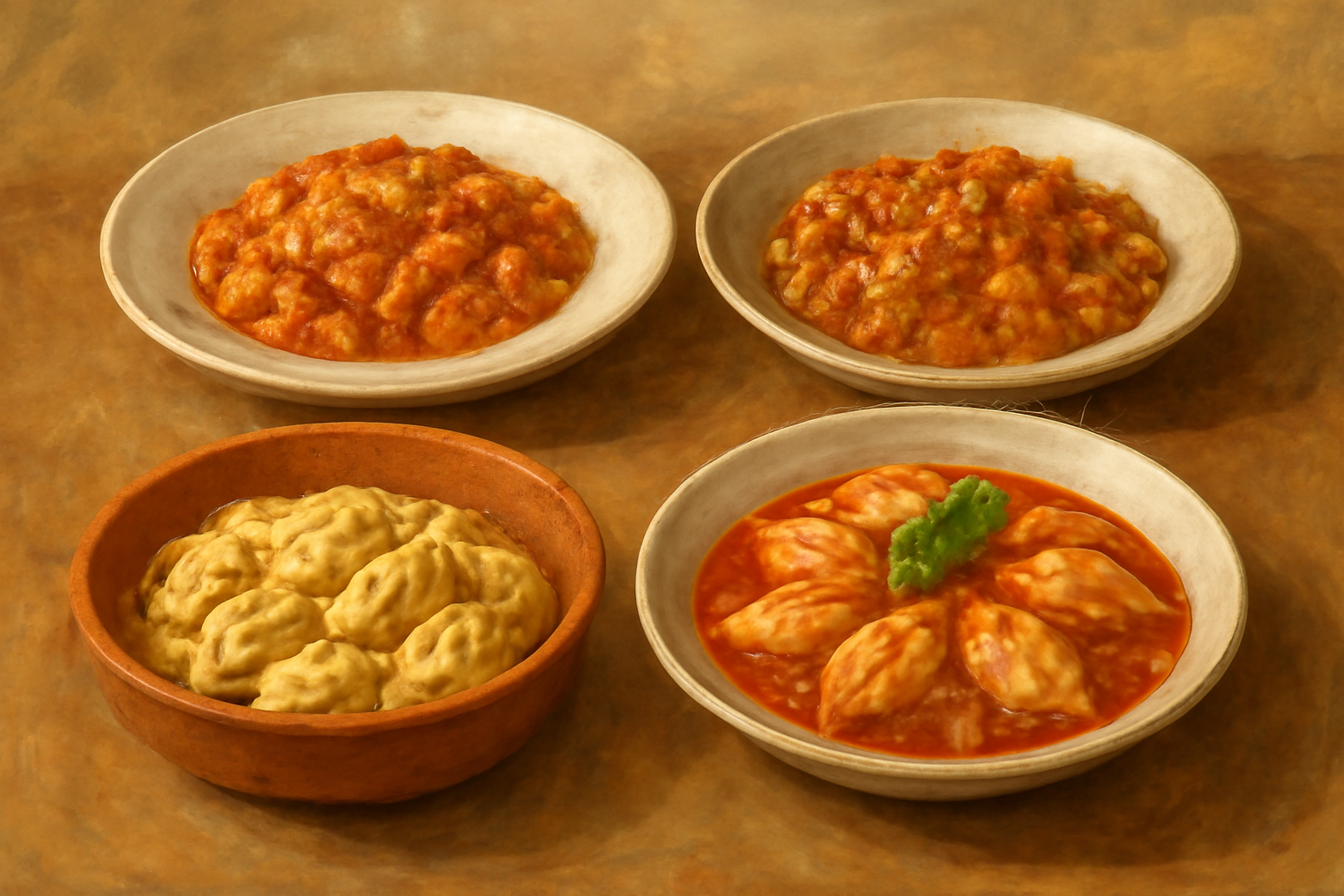
These dishes introduce traditions from across Sardinia, not just Cagliari. Menus and recipes vary, and no particular dish is guaranteed to be available. Use the descriptions below to decide what appeals, then check the restaurant’s own version.
Sardinian pasta names at a glance
| Pasta | Recognisable form | A documented preparation |
|---|---|---|
| Malloreddus | Small ridged shells | Alla campidanese, with sausage meat sauce |
| Culurgiones | Filled, elongated pasta, often closed with an ear-of-wheat pattern | Ogliastra-style filling with potato, pecorino and mint; tomato and basil are a common accompaniment |
| Fregula or fregola | Small grains of pasta | Cun cocciula, with clams, is a Cagliari speciality |
| Lorighittas | Intertwined pasta shaped like an earring | A Morgongiori preparation with tomato, chicken, herbs and grated pecorino |
| Su filindeu | Fine pasta threads | Served in lamb broth with slivers of pecorino |
The table gives examples, not fixed recipes for every menu. SardegnaTurismo groups fregola and malloreddus among dried pastas, and culurgiones, filindeu and lorighittas among fresh pastas. Their more useful distinction at the table, however, is what you will actually eat: shells, filled parcels, grains, rings or threads in broth.
Malloreddus: ridged shells and Campidano sauce
Malloreddus are small shells made from flour and water. Their ridges are traditionally formed by pressing pieces of dough with a thumb against the bottom of a wicker basket. If you want a recognisable pasta shape rather than a filling or a soup, this is a useful place to start.
Sources: SardegnaTurismo: malloreddus shape
The best-known preparation cited by SardegnaTurismo is malloreddus alla campidanese, with sausage meat sauce. The name points to Campidano, the southern Sardinian area, rather than establishing that every plate of malloreddus comes from Cagliari. Choose this version when the savoury sausage sauce is as much of the attraction as the pasta itself.
The same pasta can take other accompaniments. The tourism authority also describes a casu furriau, with melted pecorino, and a mazza frissa, with a cream-based sauce. A menu that says only “malloreddus” therefore identifies the pasta but does not promise the sausage preparation. Ask which sauce is used if that is what will decide your order.
Sources: SardegnaTurismo: malloreddus sauces
Names can change around the island. SardegnaTurismo lists malloreddus in Campidano alongside names including cigiones or ciocioneddos around Sassari and chiusoni in Gallura. They are useful regional clues, but the menu description remains the best guide to the plate in front of you.
Culurgiones: filled pasta from an Ogliastra tradition
Culurgiones are the choice for a filled pasta rather than a plain shape dressed with sauce. SardegnaTurismo describes the Ogliastra speciality as elongated, with a carefully worked closure resembling an ear of wheat, known as sa spighitta. Its overview gives potato, pecorino and mint as a filling and tomato and basil as the most common seasoning.
The fold makes culurgiones distinctive, but the filling is just as important to the choice. Potato gives the documented version its substantial centre; pecorino adds the sheep’s cheese element, while mint supplies an herbal note. If the menu mentions tomato, that describes an accompaniment rather than replacing the question of what is inside.
Why the filling can change
Local examples show why one filling should not be treated as the rule everywhere. In Lotzorai, SardegnaTurismo describes culurgiones filled with potato, cheese and mint. Its Villagrande Strisaili example uses potato, sheep suet, aged pecorino, eggs, garlic and basil, served with tomato sauce. In Ulassai, its itinerary describes mint in place of basil.
Those are descriptions of particular local traditions, not a prediction of the filling in a Cagliari restaurant. If herbs, cheese or meat-derived ingredients affect your choice, ask what is in that restaurant’s filling as well as its sauce. Ogliastra culurgiones have PGI recognition, but a menu name by itself should not be read as proof that a particular serving carries that designation.
Sources: SardegnaTurismo: Ogliastra PGI and filling variations
Fregula: small pasta grains, with a Cagliari connection
Fregula, also written fregola, looks different from both malloreddus and culurgiones: it consists of small pasta grains made from durum wheat flour and water. SardegnaTurismo describes shaping them by rotating the dough, then drying them. Think of the grains as the pasta component, not as a guarantee of a particular broth or sauce.
For a specifically Cagliari-associated example, look for sa fregula cun cocciula: fregula with clams. It is a useful choice if you want a seafood preparation and a documented connection to the city. That connection belongs to this preparation, not to every Sardinian pasta dish served in Cagliari.
Fregula is versatile beyond clams. SardegnaTurismo also describes it in fish, vegetable or meat soups, a baked Logudoro preparation called su succu istuvadu, and fregula incasada creamed with pecorino in Castiadas and San Basilio. If a menu says simply “fregula”, read on: a seafood dish, a soup and a cheese preparation offer quite different reasons to order it.
Lorighittas and su filindeu: two distinctive regional traditions
Lorighittas are associated with Morgongiori, at the foot of Mount Arci. Made from durum wheat flour, water and salt, they have an intertwined shape likened to an earring. SardegnaTurismo describes a traditional local seasoning of tomato and chicken sauce, herbs and grated pecorino. Choose them for the worked shape if you see them listed, while checking the actual accompaniment.
Su filindeu offers a different experience: fine pasta threads served in lamb broth with slivers of pecorino. SardegnaTurismo connects the dish with Barbagia and the feast of San Francesco at Lula, when it is offered to pilgrims arriving from Nuoro. If you want a broth-based dish rather than filled pasta or a plate of shells, this is the comparison to notice.
Sources: SardegnaTurismo: su filindeu and the Lula pilgrimage
Neither association makes these Cagliari inventions. They are examples of the regional range a visitor can learn to recognise, whether or not a particular menu offers them. Their names are also a reminder that the texture and format of a pasta can be as interesting as its sauce.
How to choose between dishes on a menu
- For sausage sauce and a small ridged shape, look for malloreddus alla campidanese. If the menu names only malloreddus, check the sauce.
- For filled pasta, choose culurgiones and ask about the filling. A potato-and-mint description and a basil-led village preparation are both documented examples, not interchangeable promises.
- For seafood with a Cagliari association, look for fregula with clams. If seafood is not what you want, a menu may describe a different fregula preparation.
- For a worked pasta shape, consider lorighittas; for fine pasta in broth, consider su filindeu. Check each menu’s full description before deciding.
Imagine a choice between malloreddus alla campidanese and culurgiones with tomato. The first documented preparation centres on ridged shells and sausage sauce; the second centres on a filling, with tomato as an accompaniment. Choose by the whole dish: the pasta shape alone does not tell you whether you would rather eat sausage or a filled parcel.
If you have dietary requirements, explain them to the restaurant and ask about the complete preparation, including filling, broth, sauce and garnish. In particular, a vegetable named in a filling does not establish that every version contains only vegetables. The Villagrande culurgiones example includes sheep suet as well as potato and herbs.
For a wider introduction beyond pasta, use the Sardinian food in Cagliari guide. If you are choosing what to try afterwards, the guide to Sardinian sweets and pastries covers a separate set of menu names.
Sources: SardegnaTurismo: Villagrande filling
Frequently asked questions
What is the difference between fregula and malloreddus?
Fregula consists of small pasta grains; malloreddus are small ridged shells. Fregula with clams is associated with Cagliari, while malloreddus alla campidanese is a documented sausage-sauce preparation. Both can be served in other ways.
What is inside culurgiones?
An Ogliastra example contains potato, pecorino and mint. Local fillings differ: SardegnaTurismo describes a Villagrande Strisaili version with potato, sheep suet, aged pecorino, eggs, garlic and basil. Ask about the version on your menu.
Are all Sardinian pasta dishes from Cagliari?
No. Fregula with clams is described as a Cagliari speciality, but culurgiones are associated with Ogliastra, lorighittas with Morgongiori and su filindeu with the Barbagia tradition.
Which Sardinian pasta is served in broth?
SardegnaTurismo describes su filindeu as fine pasta threads in lamb broth with pecorino. Fregula can also be served in soups, so check the preparation named on the menu.