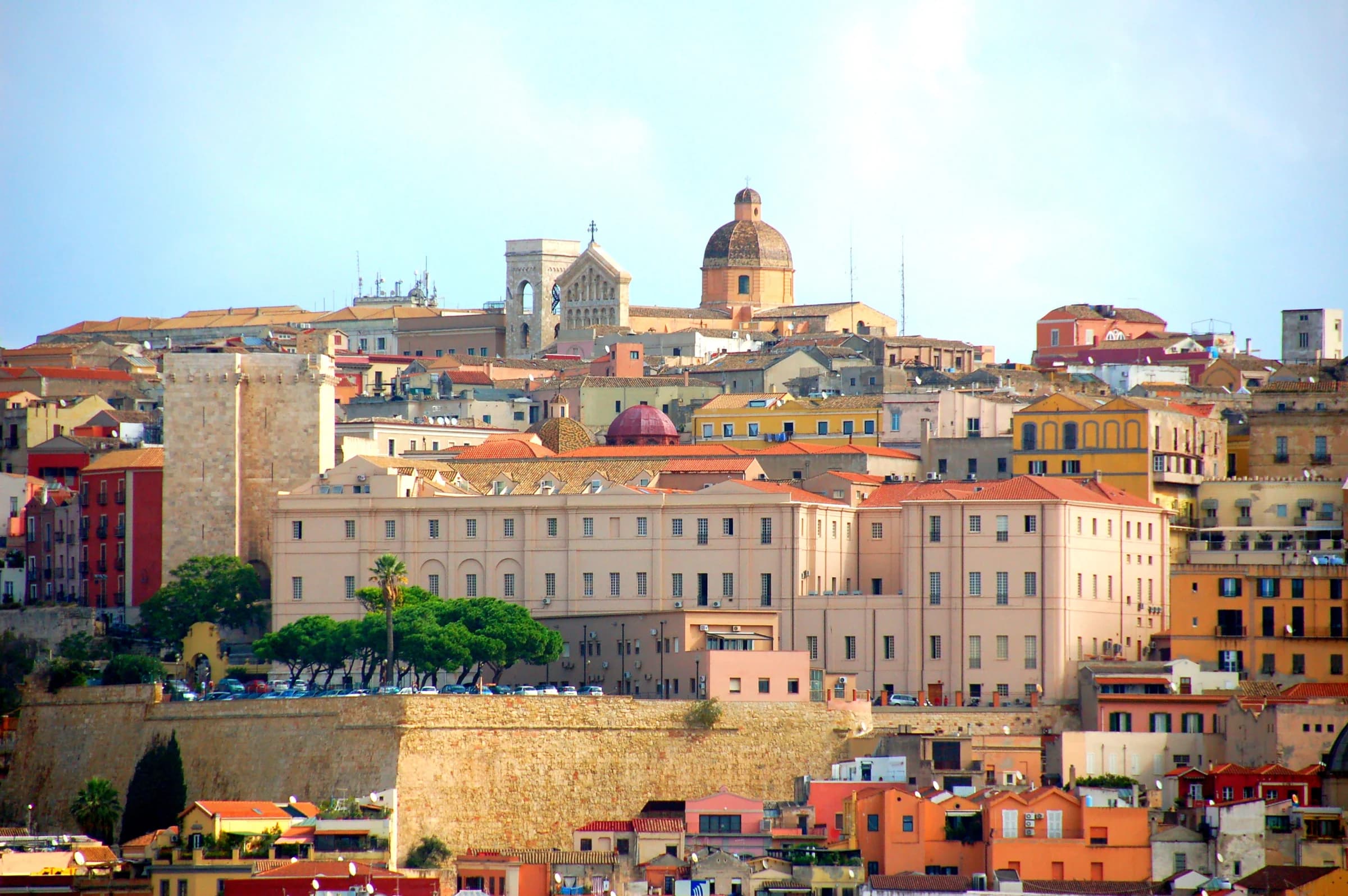

Why choose Castello
Castello offers a stay inside Cagliari’s documented historic district, where the fortified hill, gates, walls and institutional heritage shape the setting. The benefit is not a generic promise of atmosphere; it is the ability to organise city time from an elevated historic base.
Choose it because you want that geography every day, not simply because it appears central on a map. The same hill that defines the district also affects arrival, repeated walks and the final approach to an accommodation entrance.
What the hill changes
The official neighbourhood description supports a hilltop setting. A routed walk from the station-side reference point to the area reference point is approximately 24 minutes. That route is a useful comparison point, while individual addresses can add distance, turns and steps.
Plan days by elevation. Group sights and streets in the upper district before descending, rather than repeating the climb between unrelated stops. This uses the verified geography to make the itinerary easier without inventing a universal walking level.
Arriving from the airport or station
The airport train reaches Cagliari quickly according to the airport operator, then Castello requires a separate onward journey. Walking and scheduled urban transport are both documented between selected reference points, but waiting and the route from the stop to the door remain additional.
A taxi can be reasonable for the arrival when luggage makes the final climb inconvenient, even if the rest of the stay is car-free. Give the exact entrance and confirm vehicle access rather than using “Castello” as a door-to-door destination.
Moving around during the stay
Castello can support a stay based on walking and urban public transport. The short scheduled segment to the selected area stop is not the entire journey; the practical time includes the walk to the stop, waiting and movement through the district.
For Poetto, official timetable data supports a journey from stops near the area to a selected beach stop. Choose the beach entrance first and retain time for the final walk. A beach day from Castello is feasible, but it is not the same as staying on the shore.
Luggage deserves its own plan
The 24-minute reference point walk should be treated as a baseline, not a promise for every property. Cobble-like historic streets, slopes or building access can matter more than the headline time. Inspect the last section of the route with the bags you will actually carry.
If arrival ease is a top priority, compare the lower Marina district. Choosing a direct transfer for check-in can solve one difficult movement without changing the rest of a city stay built around walking.
Good choice if
Think twice before choosing Castello
Do not infer nightlife, quietness or property quality from the district’s historic importance. Those attributes remain outside the available evidence. A memorable setting can coexist with an address that does not fit your sleep, access or service needs.
Do not read “car optional” as a verdict on every South Sardinia excursion. It applies to the verified station-to-area journey and selected city connections. Regional trips still require their own route and return plan.