At a glance
Why Poetto works during a Cagliari stay
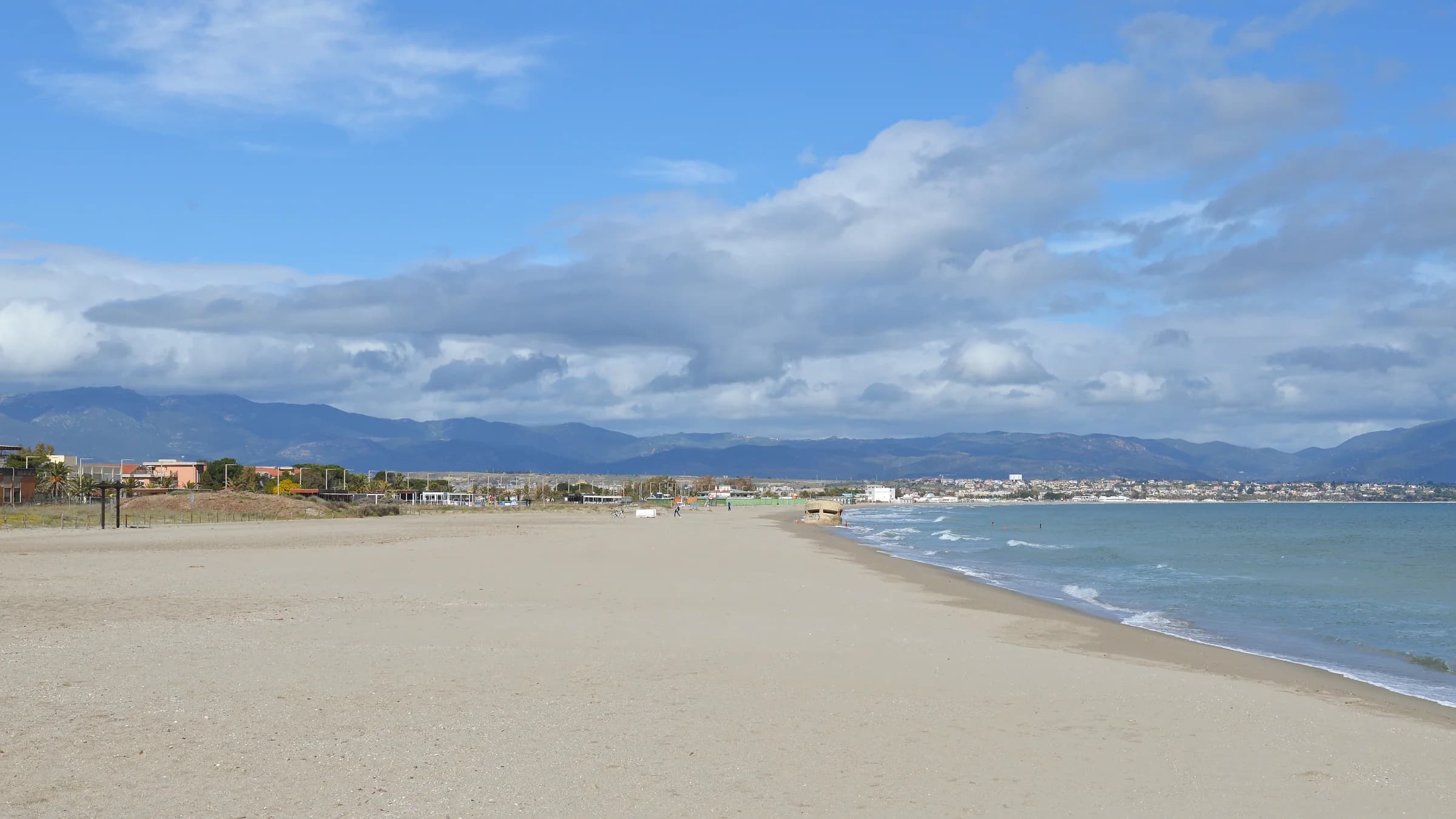
Poetto is the practical choice when the beach must fit around the city rather than consume the whole day. Its sandy shore and shallow seabed are supported by the tourism sources, while the urban public-transport corridor gives travellers without a car a workable starting point.
That convenience changes the shape of the day. You can plan a focused two-to-three-hour beach visit, keep travel within the urban network and still leave time for an evening in central Cagliari. Treat that duration as a planning range, then adjust it for weather, swimming conditions and your preferred pace.
Four useful Poetto map references
| Decision point | How to use it |
|---|
| 1 | Marina Piccola marks the Cagliari end beneath the Sella del Diavolo. It suits a short seafront walk or a visit that starts around the small harbour; search “Marina Piccola Cagliari”, then check the final pedestrian route to the sand. |
|---|
| 2 | The First Stop is the traditional name to use when shallow water is the priority. The Second and Third Stops are useful references for the historic Lido and D’Aquila establishments and the busier middle section of the Cagliari shore. |
|---|
| 3 | The Fifth Stop is the clearest bus-to-place pairing in the current sources: CTM calls the stop “Poetto (opposite Ippodromo)” and locates it by Quinta Fermata. The stop is on the lungomare; it is still separate from the access across the seafront to the sand. |
|---|
| 4 | La Bussola and Margine Rosso are references farther towards Quartu Sant’Elena. Choose that end only when the longer shoreline is part of the plan; it is a different destination from Marina Piccola even though both appear under the name Poetto. |
|---|
A complete centre-to-sand example
- 1
Start around Piazza Matteotti, beside Cagliari railway station and the ARST bus station. Use CTM’s Busfinder or Around Sardinia for your travel date and select a current Poetto service that stops at Poetto (opposite Ippodromo); CTM currently lists routes such as PF and PQ, but line patterns can change.
- 2
Ride to Poetto (opposite Ippodromo), the named stop for the Fifth Stop. After alighting, orient yourself on Lungomare Poetto, use the marked pedestrian crossing and follow the access to the sand. The stop, the promenade and the beach entrance are three separate points.
- 3
For the return, search from the stop on the opposite side of the road to Piazza Matteotti or your actual central destination. Save a current return option before settling on the beach; the roughly 25-minute ride in the checked timetable is an example for that service date, not a permanent promise.
A half-day plan that leaves room for Cagliari
For a simple beach break, leave central Cagliari in the morning, use the Fifth Stop example, spend two to three hours between the sand and promenade, then return by early afternoon. This keeps the beach useful without giving the entire day to transfers.
For Poetto plus Molentargius, use Marina Piccola or a central Poetto section only after checking the separate park entrance route. Give the park and beach their own arrival points, and drop one segment if heat, wind or waiting time consumes the margin.
Which Poetto section works for families?
For the gentlest water profile, begin with the First Stop: Sardegna Turismo specifically describes very shallow water there. Families who value established facilities may prefer the Second or Third Stop around the historic lidos, after confirming the service they need at that entrance.
The Fifth Stop is easier to identify from a CTM stop name and gives access to a broad section of shore. Choose it for a straightforward bus reference, then verify shade, toilets or assisted access at the exact establishment or free-beach section you intend to use.
Services vary along the shore
Toilets are documented at Poetto, and the regional tourism source describes a broad range of beach services. Because the beach is long, the useful question is not simply whether a service exists, but whether it is near the entrance you plan to use on that date.
Parking, current crowds and wind exposure are not sufficiently established in the available sources. They therefore stay outside the recommendation. Travellers arriving by car should verify the exact access point separately rather than relying on a general beach-level assumption.
Pair Poetto with Molentargius
Poetto and the Molentargius wetland form a geographically coherent city-side pairing. Use the park’s Sali Scelti guide to choose the entrance and route, then keep the beach segment flexible. The two experiences are related, but they have different arrival points and should not be treated as one stop.
A useful sequence is nature first, beach second when conditions suit. This avoids turning a wildlife visit into a promise about sightings and lets the beach absorb timing changes. If you only have a few hours, choose one experience and do it properly instead of rushing between access points.
Common planning mistakes
The first mistake is routing to the word “Poetto” without choosing a specific entrance. The second is reading the scheduled ride as the whole journey. The third is assuming every facility is beside every stop. Each error comes from treating a long beach as a single door-to-door destination.
Another mistake is using Poetto as evidence about other beaches. Its urban connection, shallow seabed and documented facilities belong to this place. Villasimius is a different decision, with a regional journey and a separate town-to-beach problem.
Poetto or a full coast day?
Choose Poetto for a flexible beach break, a lower transport burden and an outing that can sit beside city plans. Choose the Villasimius day trip when coastal variety is the main purpose and you can protect a full day for travel, the final beach leg and the return.
The decision is mostly about time and logistics, not a universal ranking of beaches. Poetto earns its place through accessibility from Cagliari; a regional coast day earns the extra effort only when the coast itself is your priority.